
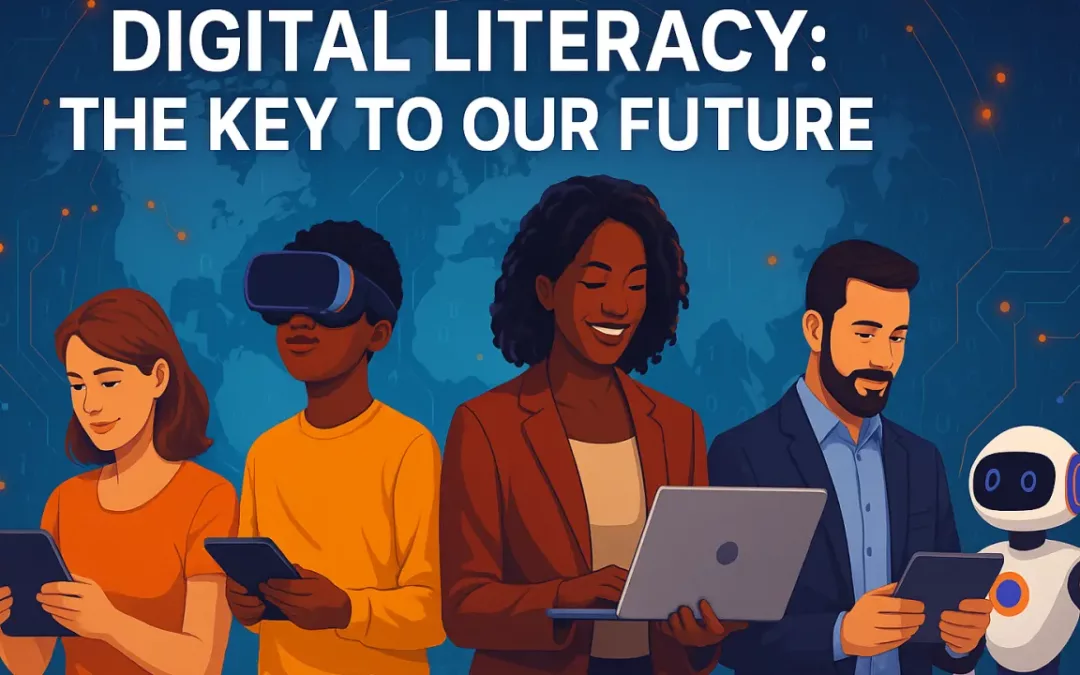
Due to the rapid advancement of technology, digital literacy has emerged as the most crucial factor for societies hoping to not only survive but also prosper in a world that is changing rapidly. These days, simply being able to operate digital devices is insufficient. Understanding artificial intelligence, big data, blockchain technology, and cybersecurity and how they impact everything from everyday life to the world economy and government is now considered digital literacy. Countries could become outdated without this profound understanding, just as pagers did with the introduction of smartphones.
Recent news intensifies the urgency of this reality. The European Commission recently underscored the importance of member states implementing comprehensive digital education programs as part of its Digital Decade policy. By 2030, the program aims to equip 80% of Europeans with fundamental digital skills. According to a Pew Research Center study released in early 2025, over 60% of respondents in the countries surveyed feel unprepared to identify deepfake or false information on the internet. This raises concerns about how feeble democratic procedures are in the digital era. AI’s pervasive dissemination of false information seriously threatens the public’s trust and social cohesiveness.
There is a lot at stake. To be digitally literate, one must do more than simply turn on a computer and browse social media. These days, it is an essential defense against manipulation. False information campaigns, algorithmic biases, and deepfakes exploit people’s ignorance and cause issues. Today, the ability to critically assess online content, verify sources, and comprehend how digital media functions is just as crucial as reading and writing were a century ago. Imagine what would happen if many people were unable to distinguish between a fake AI-generated video of a politician and an actual news story. Ruining elections, eroding trust in institutions, and dismantling society are a few of the dangers.
In addition to defense, digital literacy is a critical component of economic growth and resilience. The most significant industries in the future labor market will be automation, cybersecurity, artificial intelligence, and data analytics. A workforce prepared to lead and innovate will be produced by nations that make strategic investments in digital education from elementary school through lifelong learning initiatives. However, as the demand for experts in AI, cybersecurity, and digital entrepreneurship exceeds the supply, those who lag behind will experience stagnation and increased inequality.
Estonia is a prime example of how to do things. Estonia launched the large-scale AI Leap 2025 project in September 2025 because of its reputation for being receptive to new technologies. This nationwide program allows adults to acquire new skills and provides free access to the best AI apps for teachers and students. The initiative aims to ensure that the current workforce remains flexible and competitive while preparing young people for a future shaped by AI. Estonia’s leaders demonstrate how a nation can become more technologically advanced and powerful by placing a high priority on digital literacy.
With an emphasis on lessons that go beyond fundamental computer skills, governments everywhere must ensure that AI and digital literacy are incorporated into their educational systems. This entails teaching children the fundamentals of cybersecurity, the role of AI in society, and how to think critically about digital content. Adult education programs must also adapt in order to assist workers in transitioning to AI-using industries. Public awareness campaigns that support fact-checking, responsible online conduct, and cyber hygiene are equally crucial.
The aim is obvious. Develop a populace that is tech-savvy and capable of both promoting new ideas and defending itself against online threats. In addition to using technology, this group will alter it, creating a more equitable and sustainable future.
Policymakers face a significant challenge, but it is imperative. Investing in digital literacy is an investment in the future of social harmony, democracy, and economic stability. The gap between those who benefit from technology and those who do not could widen if you do nothing.
To begin reintroducing digital literacy to your community or organization, consider the following helpful actions:
- Encourage laws that advance comprehensive digital education.
- Encourage initiatives that provide low-cost or free access to AI training and tools.
- Encourage public seminars on critical thinking, cybersecurity, and media literacy
- Encourage employers to cover the continuing education of their staff in digital skills.
- To keep curricula current and forward-thinking, encourage collaboration between the government, academia, and business.
It is everyone’s responsibility to ensure that people are digitally literate, including governments, businesses, educators, and citizens. By accepting this challenge now, societies can get ready to confidently and creatively manage the complex demands of the digital age.
The future will belong to those who are well-versed in technology and use it sensibly. Stronger economies, more informed citizens, and individuals capable of thriving in the AI era will be found in nations that place a high priority on digital literacy.
It is time to take action. A digital divide that could determine who leads and follows in the next century is closing quickly.
If you want to bring stronger digital literacy, AI awareness, and critical thinking into your company, school, or community, I support leaders and organizations with consulting, keynote speaking, and practical frameworks that connect technology to real human outcomes.
To explore how I can help or to dive deeper into these topics, discover my consulting work, speaking topics, and my book Life in the Digital Bubble.
This article was also featured on LinkedIn. You can view the discussion there: LinkedIn version