
Articles & Guides
You can find all my written resources in one convenient location.
Essays, playbooks, and reflections on AI, digital transformation, leadership, industries, and life in the digital bubble.
Prefer watching instead? Visit the Videos & Series library.
Filter by topic:
Leadership · Digital Bubble Series · Industries · IT & Infrastructure · Ethics & Society

Digital Minimalism for Enterprises (3/3): Building a Stop-Doing Operating Model
The majority of businesses keep thorough backlogs for construction. New AI pilots, new features, and new integrations. Roadmaps are structured. Committees for investments are organized. Pipelines for deliveries are optimized. However, very few companies keep a backlog for stopping.
This is the structural weakness that underlies digital accumulation from the standpoint of technology leadership. Complexity increases every quarter in the absence of a formalized subtraction discipline. Transformation leads to expansion, which in turn leads to weight. Removal is quantifiable, accountable, and given the same level of scrutiny as delivery under the governance model introduced by the Anti-Backlog.
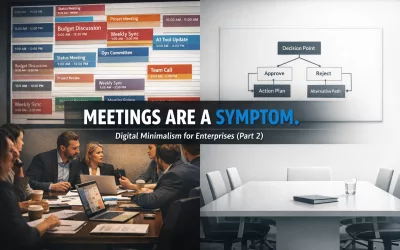
Digital Minimalism for Enterprises (2/3): Meeting Inflation Is an Architectural Problem
Meeting overload is typically handled as a disciplinary matter in organizations. It is an architectural signal as seen by a CIO. Meetings increase to make up for fragmented systems, conflicting metrics, and unclear decision rights. The architecture is the real issue, not the calendar.

Digital Minimalism for Enterprises (1/3): Why Enterprises Must Stop Adding Tools
Every big transformation starts with good intentions. But when progress turns into accumulation, digital transformation quietly becomes digital clutter. A new platform for working together promises to make it easy to work together. A new analytics dashboard says it...
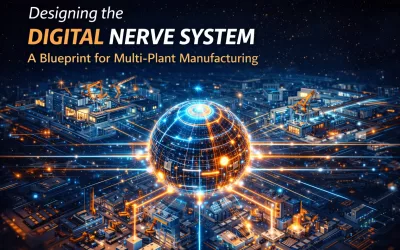
Designing the Digital Nerve System: A Blueprint for Multi-Plant Manufacturing
A lot of manufacturers have one or two “lighthouse” plants, but they have a hard time getting that knowledge to all of their plants. This article gives a practical plan for making a digital nerve system that links several factories. The system should have a common language, common capabilities, and a secure data backbone so that improvements made in one factory can be used in all of them.

The Invisible Factory: Using IT to See Every Euro of Waste Before It Happens
There are two factories in every plant: the one that everyone can see and the one that no one can see, which is made up of micro-stops, normal scrap, hidden energy waste, and engineers looking for data. This article explains how thinking of IT as the nervous system of a manufacturing company can make that factory visible and help you save money.
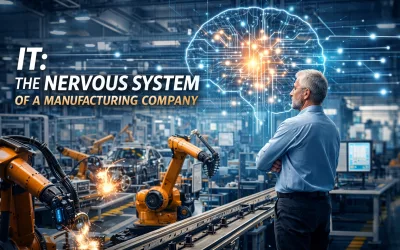
From Cost Center to Nervous System: How IT Can Rewire a Manufacturing Company
In a lot of manufacturing companies, IT is still seen as a cost center that keeps things running. In fact, it has become the organization’s nervous system, sensing what happens in the plants, linking data across sites, and helping people make better choices. This article talks about how a well-designed IT “nervous system” can cut down on downtime and change the way factories work.
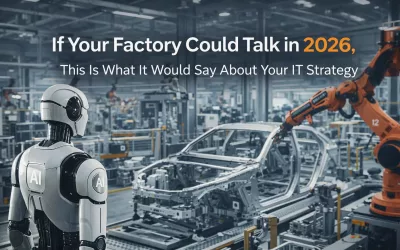
If Your Factory Could Talk, This Is What It Would Say About Your IT Strategy
A modern plant looks completely “digital” from the outside. From the inside, most factories still see AI as isolated pilots, broken data, and IT plans that end at the firewall. This article imagines what your factory would say in 2026 if it could be honest about your IT strategy. It also talks about what leaders need to do to create a real digital nervous system for manufacturing.
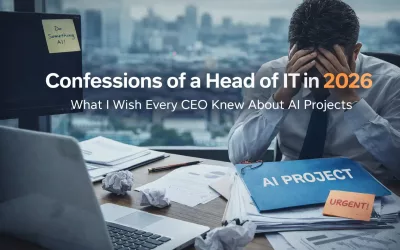
Confessions of a Head of IT: What I Wish Every CEO Knew About AI Projects
It seems like AI is a success story from the outside, since almost every company says they are “using AI.” As the Head of IT, the truth is more complicated from the inside. In this article, I talk about five real problems with AI projects in 2026, from the zoo of tools we’ve made to the lack of a human operating system. I also talk about what CEOs and boards really need to do to fix things.
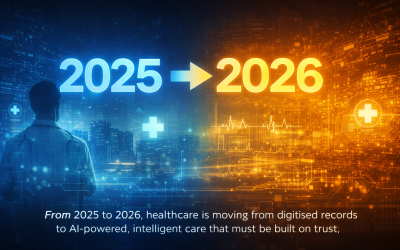
The Silent Shift: How 2025 Redefined Digital Health and What Comes Next
In 2025, healthcare went from slow digitization to smart, AI-powered care. This article talks about three significant changes in digital health: AI becoming a part of the care fabric, real data infrastructure like Germany’s ePA, and more pressure from regulators on trust and equity. It also tells healthcare leaders what they need to focus on in 2026.

The Quiet Rewiring: How 2025 Redefined Finance and What Comes Next
2025 quietly changed the way banking, insurance, and payments work. AI went from being an experiment to being part of the infrastructure, money became programmable, and regulators took control. This article looks at those changes and explains what financial leaders need to do in 2026 to compete in a safe and smart way.
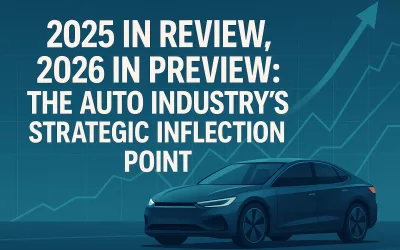
2025 in Review, 2026 in Preview: The Auto Industry’s Strategic Inflection Point
2025 was a turning point for the auto industry. EV enthusiasm cooled, software and AI moved to the centre, and autonomous mobility quietly scaled. This article reviews the year’s three big convergences and outlines what automotive leaders must do in 2026 to stay competitive.

Post-Quantum Cryptography: Why “Encrypted” IS No Longer “Safe Forever”
Quantum computing will break many of the cryptographic systems leaders still rely on. This article explains “harvest now, decrypt later,” what post-quantum cryptography is, and the first practical steps CIOs and executives should take now.