Executive & Leadership Insights
Strategic perspectives on leading digital transformation, scaling AI, and making technology decisions at the executive level.
Digital transformation is no longer a technology challenge. It is a leadership challenge.
In this section, I share insights for CIOs, executives, and decision-makers navigating complexity, balancing speed with risk, and translating technology into real business outcomes.
The focus is not on trends, but on decisions: what to prioritize, what to avoid, and how to lead with clarity in an increasingly digital world.
Key Questions for Leaders
As I write these articles, I am on a journey to better understand the leadership questions that shape transformation outcomes. I am not only sharing ideas; I am exploring the real decisions leaders face when complexity rises and technology choices have long-term consequences. These articles are my way of working through those questions and trying to answer them with greater clarity and practical relevance.
-
- What leadership mistakes derail transformation?
- How do CIOs lead through complexity?
- What should technology leaders prioritize first?
- How do governance and judgment shape outcomes?
Latest in Executive & Leadership Insights
Fresh perspectives for CIOs and senior leaders on leadership, governance, prioritization, and transformation decisions.

The Junior Engineer Was Right. I Overrode Him.
He was one of the youngest people on the team, and he was right. I told him no anyway. Sales had promised the delivery date without consulting us, the contracts were signed, and every path to push it back was closed. This is the story of the shortcut I approved, the debt that came due exactly as he predicted, and the two failures that cost more than the rework itself.
CIO Leadership
Lead with clarity, not reaction. Explore how modern CIOs build trust, shape direction, and move from operational control to strategic leadership.
Decision-Making & Governance
Strong transformation depends on clear decisions, clear ownership, and disciplined governance. These insights focus on prioritization, accountability, and executive judgment.
Leading Transformation
Transformation succeeds when leaders align people, processes, and technology around a clear direction. This theme covers how to lead change without creating more complexity.
Technology & Business Alignment
Technology creates value only when it serves real business outcomes. These articles explore how leaders connect platforms, priorities, and investment decisions to measurable impact.

The Seven Deadly Sins of the Legacy CIO (6/8): 5. Greed—The Illusion of Simplification
Dante said that greed is not being able to let go. For the legacy CIO leadership, this means not being able to stop adding. Every new system promises to make things better. Without discipline, though, it leads to dependence, fragmentation, and hidden complexity. The danger is not what is added. It is what is never taken away.
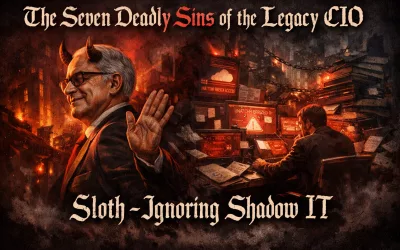
The Seven Deadly Sins of the Legacy CIO (5/8): 4. Sloth—Ignoring Shadow IT
In leadership, sloth is not the same as laziness. It’s avoidance. It occurs when a CIO observes Shadow IT spreading throughout the company and decides not to take action. It appears innocuous at first. A workaround here, a tool there. However, it eventually turns into loss of control, fragmentation, and hidden risk. What you are unable to control does not go away.
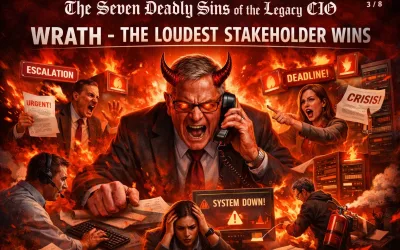
The Seven Deadly Sins of the Legacy CIO (4/8): 3. Wrath—The Loudest Stakeholder Wins
Wrath in technology leadership does not appear as anger. It appears as constant responsiveness, where escalation, pressure, and urgency replace structured prioritization, trapping IT organizations in continuous firefighting and preventing real progress.
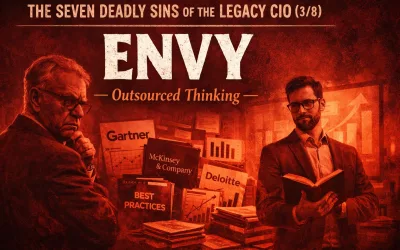
The Seven Deadly Sins of the Legacy CIO (3/8): 2.Envy—Outsourced Thinking
Envy in technology leadership rarely appears as jealousy. It looks like outsourced thinking when legacy CIOs stop trusting their own judgment and their teams and start using outside frameworks, benchmarks, and consulting models to make decisions about strategy.
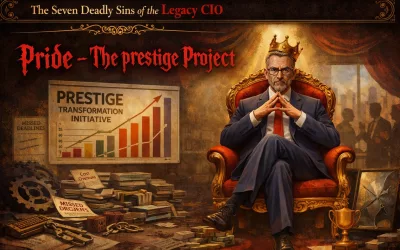
The Seven Deadly Sins of the Legacy CIO (2/8): 1. Pride—The Prestige Project
Pride is one of the legacy CIO sins and typically doesn’t appear as arrogance. It looks like an attachment to a visible change program that is difficult to question. When leaders lack clarity, they make slower decisions, misuse resources, and silently divert off course with digital transformation.
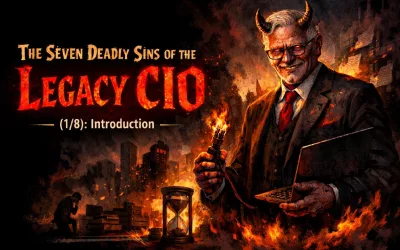
The Seven Deadly Sins of the Legacy CIO (1/8): Introduction
Why digital transformation often fails because of outdated leadership in technology. A 700-year-old framework from Dante reveals the leadership patterns that still derail some modern CIOs.
Videos in this topic
No Results Found
The page you requested could not be found. Try refining your search, or use the navigation above to locate the post.
Bring these insights to your organization.
If you are leading or preparing for a major transformation and need clarity at the executive level, I support leaders through CIO advisory and digital transformation engagements.
Explore other insights:
Digital Transformation & AI Strategy
How organizations design, prioritize, and execute transformation and AI initiatives to deliver measurable business outcomes.
Modern IT & AI Infrastructure
The technical foundation required to scale AI, secure data, and operate resilient, future-ready platforms.
AI, Ethics & Society
The broader impact of AI and digital systems on people, organizations, and society, from ethics to digital wellbeing.
Industry Playbooks
How digital transformation and AI play out across industries, including manufacturing, healthcare, finance, and beyond.