
Executive & Leadership Insights
Strategic perspectives on leading digital transformation, scaling AI, and making technology decisions at the executive level.
Digital transformation is no longer a technology challenge. It is a leadership challenge.
In this section, I share insights for CIOs, executives, and decision-makers navigating complexity, balancing speed with risk, and translating technology into real business outcomes.
The focus is not on trends, but on decisions: what to prioritize, what to avoid, and how to lead with clarity in an increasingly digital world.
Key Questions for Leaders
As I write these articles, I am on a journey to better understand the leadership questions that shape transformation outcomes. I am not only sharing ideas; I am exploring the real decisions leaders face when complexity rises and technology choices have long-term consequences. These articles are my way of working through those questions and trying to answer them with greater clarity and practical relevance.
-
- What leadership mistakes derail transformation?
- How do CIOs lead through complexity?
- What should technology leaders prioritize first?
- How do governance and judgment shape outcomes?
Latest in Executive & Leadership Insights
Fresh perspectives for CIOs and senior leaders on leadership, governance, prioritization, and transformation decisions.
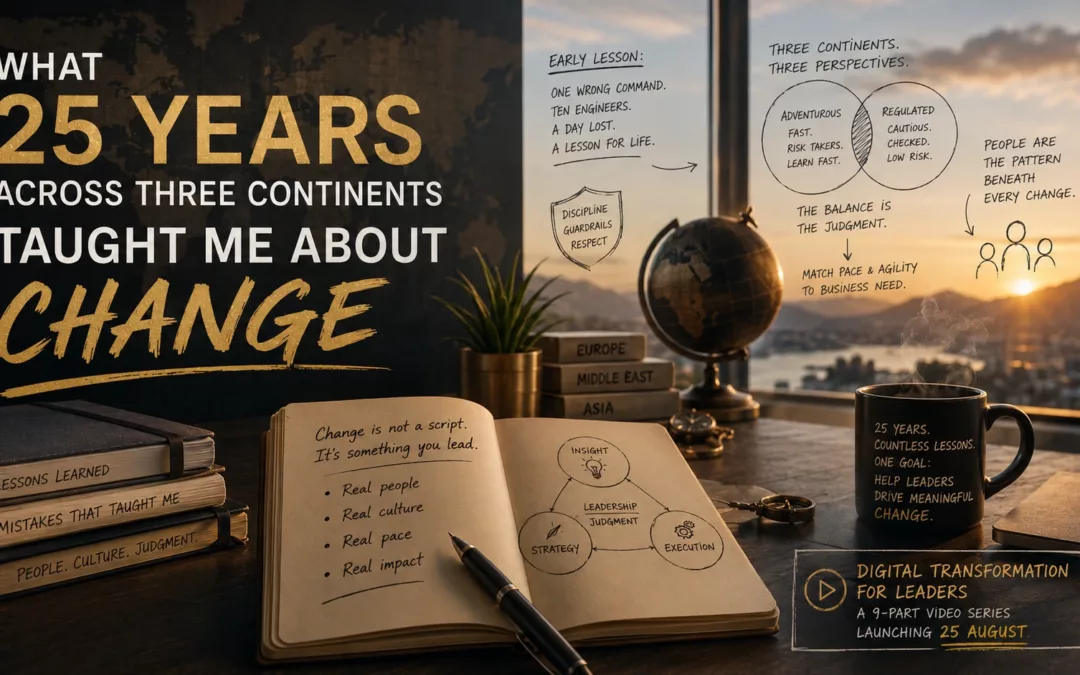
What 25 Years Across Three Continents Taught Me About Change
Early in my career, one mistyped command deleted every scheduled job in the environment. Ten engineers spent a day restoring it. That afternoon taught me why change discipline exists. Twenty-five years across three continents taught me the rest: that culture decides the pace of change, people decide whether it lasts, and judgment matters more than any framework. This is what I learned, and the series I built from it.
CIO Leadership
Lead with clarity, not reaction. Explore how modern CIOs build trust, shape direction, and move from operational control to strategic leadership.
Decision-Making & Governance
Strong transformation depends on clear decisions, clear ownership, and disciplined governance. These insights focus on prioritization, accountability, and executive judgment.
Leading Transformation
Transformation succeeds when leaders align people, processes, and technology around a clear direction. This theme covers how to lead change without creating more complexity.
Technology & Business Alignment
Technology creates value only when it serves real business outcomes. These articles explore how leaders connect platforms, priorities, and investment decisions to measurable impact.

The Junior Engineer Was Right. I Overrode Him.
He was one of the youngest people on the team, and he was right. I told him no anyway. Sales had promised the delivery date without consulting us, the contracts were signed, and every path to push it back was closed. This is the story of the shortcut I approved, the debt that came due exactly as he predicted, and the two failures that cost more than the rework itself.

Everyone in the Room Nodded. Nobody Agreed.
The data initiative had been in discussion for months. Then one meeting, IT leadership finally seemed to agree. I walked out believing we had alignment. We had nodding. When the details reached the final stages, every department turned out to hold a different version of what the project was. The project shipped on time, but the people who started it were gone before it went live. This is the story of the false alignment trap and how to force real agreement.
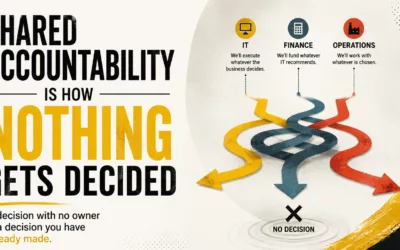
Shared Accountability Is How Nothing Gets Decided
The vendor called it the future. Our CIO believed it. So we set the ambition to migrate to the newest ERP architecture, and then the decision sat unowned for far too long. IT waited on the business. Finance waited on IT. Operations vetoed without offering an alternative. This is the story of a decision nobody would sign, what the delay cost, and the one move that finally broke the deadlock.
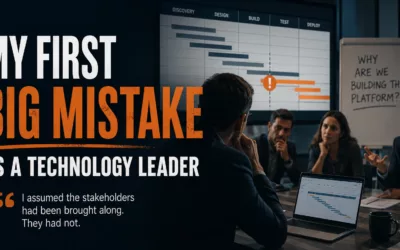
My First Big Mistake as a Technology Leader
I joined the transformation late and assumed the stakeholders had been brought along. They had not. Halfway through the build, I was explaining to primary stakeholders why we were building the platform at all, work that should have been done before a single line of code was written. This is the story of that mistake and the lesson I now bring to every transformation.

The Seven Deadly Sins of the Legacy CIO (8/8): 7. Lust—Power Over Purpose
Lust, according to Dante, is aimless desire. This seems to be power without a purpose in the legacy CIO. The role grows. There is more control. Visibility increases. However, something vital is lost beneath the surface. Decisions take longer to make. Autonomy vanishes. Trust starts to erode.
The organization does not experience severe failure. It gradually changes from impact to influence, from enablement to control. That change alters everything.

The Seven Deadly Sins of the Legacy CIO (7/8): 6. Gluttony—Automating Chaos
Being a glutton in leadership doesn’t mean using too much technology. It’s about using it without any rules. Automation and AI promise faster, more efficient, and more progress. But they don’t fix the problem when they are used on broken processes and bad data; they make it worse. What used to be a small problem becomes a big problem that happens quickly. What was easy to handle becomes hard to see and control. The speed goes up. Things become less clear. And over time, companies don’t get better; they just get better at doing the wrong things.
Videos in this topic

Tip #6 – Against the Always-On Culture
Always-on work culture does not create high performance; it creates slow burnout and shallow decisions. This short tip shows how leaders can protect attention, model healthier norms, and lead change with clarity in the digital era.
Bring these insights to your organization.
If you are leading or preparing for a major transformation and need clarity at the executive level, I support leaders through CIO advisory and digital transformation engagements.
Explore other insights:
Digital Transformation & AI Strategy
How organizations design, prioritize, and execute transformation and AI initiatives to deliver measurable business outcomes.
Modern IT & AI Infrastructure
The technical foundation required to scale AI, secure data, and operate resilient, future-ready platforms.
AI, Ethics & Society
The broader impact of AI and digital systems on people, organizations, and society, from ethics to digital wellbeing.
Industry Playbooks
How digital transformation and AI play out across industries, including manufacturing, healthcare, finance, and beyond.