Articles
You can find all my written resources in one convenient location.
Essays, playbooks, and reflections on AI, digital transformation, leadership, industries, and life in the digital bubble.
Prefer watching instead? Visit the Videos library.
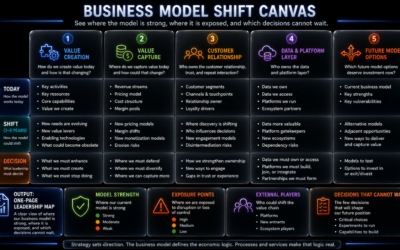
Digital Transformation for Leaders, Step 5: Business Models and the Business Model Shift Canvas
A private clinic kept delivering excellent care and still lost control of the customer relationship to a booking platform. Here is the five-year displacement test and the one-page canvas built to catch it before it happens to you.
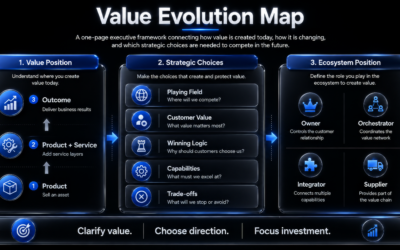
Digital Transformation for Leaders, Step 4: Strategy and the Value Evolution Map
Rolls-Royce sells flying hours now, not engines. That is not the lesson. The lesson is the question they answered first: what are customers actually paying for? Here is the 15-minute test that forces the same answer out of your team.
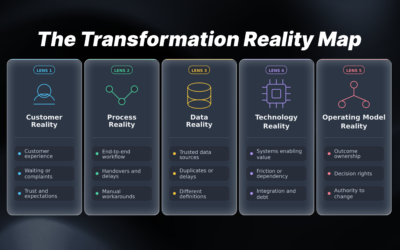
Digital Transformation for Leaders, Step 3: Evaluation and the Transformation Reality Map
Air Canada lost a tribunal over a chatbot’s wrong answer. The chatbot exposed a problem for which there was no clear answer. Here’s the ten-minute test and the five-lens map that catches it first.
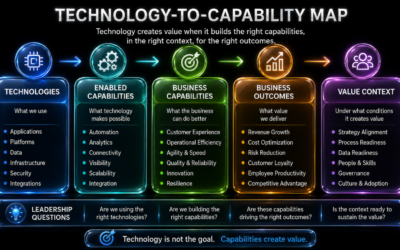
Digital Transformation for Leaders, Step 2: Technology and the Technology-to-Capability Map
Lidl spent seven years and roughly 500 million euros on SAP before scrapping it. The platform worked fine. What failed was the fit, and that gap is exactly what step two’s framework is built to catch.
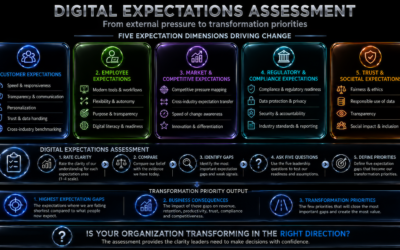
Digital Transformation for Leaders, Step 1: Society and the Digital Expectations Assessment
BMW’s $18-a-month heated seats sound like a pricing story. It’s actually a lesson in reading customer expectations, with five questions and a free assessment you can run on your own organization this week.
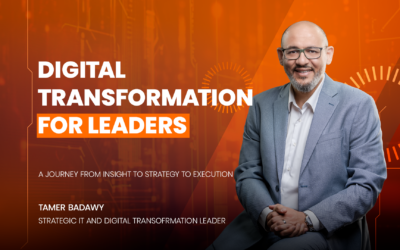
Digital Transformation for Leaders: A Nine-Step Journey from Insight to Strategy to Execution
The model behind Tuesday’s episode: three phases, nine steps, and a three-question readiness test you can run on your own organization today. Nine real companies show up across the series, one per step, starting next Friday.
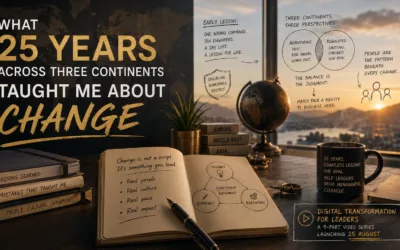
What 25 Years Across Three Continents Taught Me About Change
Early in my career, one mistyped command deleted every scheduled job in the environment. Ten engineers spent a day restoring it. That afternoon taught me why change discipline exists. Twenty-five years across three continents taught me the rest: that culture decides the pace of change, people decide whether it lasts, and judgment matters more than any framework. This is what I learned, and the series I built from it.

The Junior Engineer Was Right. I Overrode Him.
He was one of the youngest people on the team, and he was right. I told him no anyway. Sales had promised the delivery date without consulting us, the contracts were signed, and every path to push it back was closed. This is the story of the shortcut I approved, the debt that came due exactly as he predicted, and the two failures that cost more than the rework itself.
We Paid an Expert to Agree With Us
We hired a respected firm to design an integration layer for our applications. They studied the present perfectly and never asked about the future. The design they steered us toward would have blocked the functionalities that should have been core to our direction. This is the story of why the comfortable recommendation is the one to watch, and what fifteen years as a system engineer taught me about resisting it.
Everyone in the Room Nodded. Nobody Agreed.
The data initiative had been in discussion for months. Then one meeting, IT leadership finally seemed to agree. I walked out believing we had alignment. We had nodding. When the details reached the final stages, every department turned out to hold a different version of what the project was. The project shipped on time, but the people who started it were gone before it went live. This is the story of the false alignment trap and how to force real agreement.
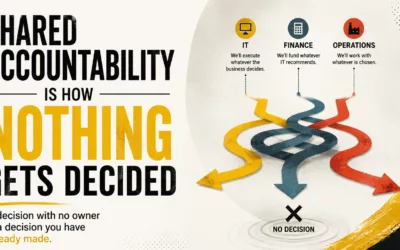
Shared Accountability Is How Nothing Gets Decided
The vendor called it the future. Our CIO believed it. So we set the ambition to migrate to the newest ERP architecture, and then the decision sat unowned for far too long. IT waited on the business. Finance waited on IT. Operations vetoed without offering an alternative. This is the story of a decision nobody would sign, what the delay cost, and the one move that finally broke the deadlock.
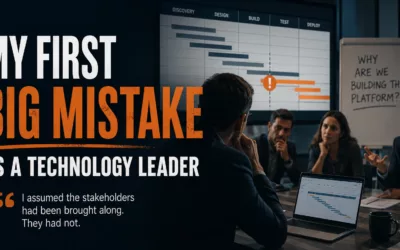
My First Big Mistake as a Technology Leader
I joined the transformation late and assumed the stakeholders had been brought along. They had not. Halfway through the build, I was explaining to primary stakeholders why we were building the platform at all, work that should have been done before a single line of code was written. This is the story of that mistake and the lesson I now bring to every transformation.