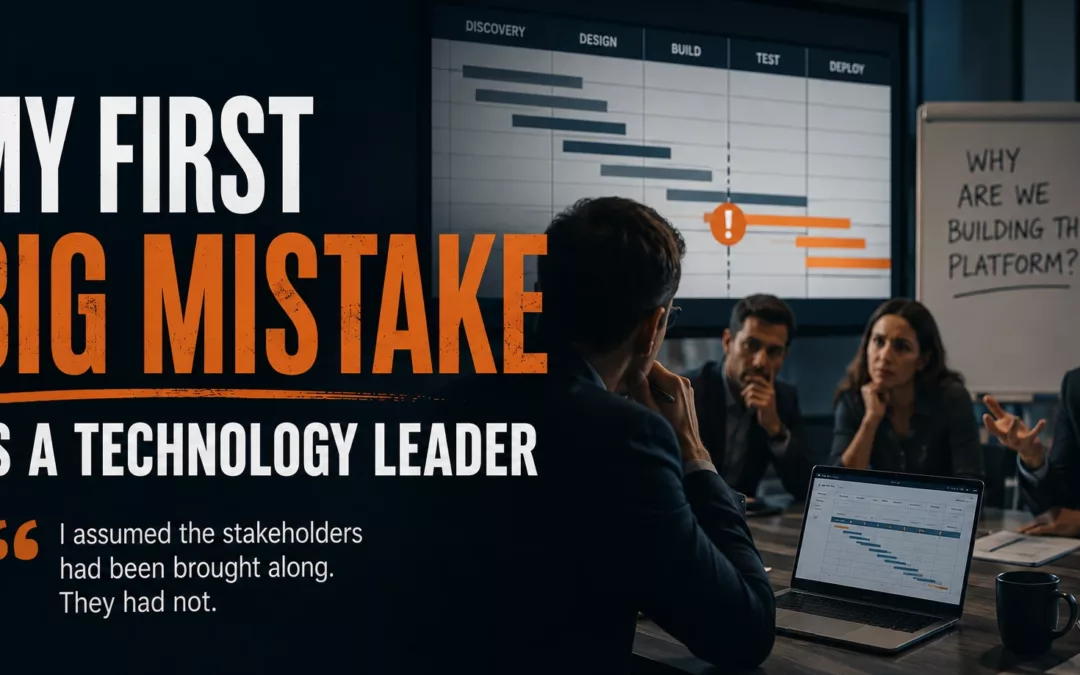
I joined the transformation late. The platform build was already moving, the budget approved, and the timeline set. When I stepped in, everything on paper said this project was ready to run. So, I made an assumption that cost me months. I assumed the stakeholders had been brought along.
They had not.
For the first stretch, everything looked fine. Workstreams moved. Teams reported progress. The technical build advanced the way it should. I had faith in the paper, which assured me that the groundwork was complete. Alignment, sponsorship, and the business case are understood and accepted across the departments that would depend on this platform. All of it, I assumed, had happened before I arrived.
Then, about halfway through, the ground shifted under the project.
The Question That Stopped Me Cold
During a review meeting, a key business stakeholder posed a question that left me speechless. Not a detail question. A foundational one. He asked why we were building this platform at all. Not how, not when. Why? When I looked around the room, I realized he was not the only one wondering. Several of the people whose support the project depended on did not understand what we were building or why the business needed it.
This gap was significant. These were primary stakeholders. These were the people whose teams would use the platform, whose budgets were affected by it, and whose quiet support was essential to the entire effort. Halfway into delivery, I was explaining the business case that should have been settled before a single line of code was written.
Here is what that felt like from the inside. I spent every week re-selling; the project arose during the week I spent delivering it. The momentum I thought we had was thinner than it looked. Beneath the green status reports, a crack ran through the foundation, and I had walked past it because the paperwork indicated it was solid.
Every week I spent re-selling; the reason for the project was the week I spent delivering it instead.
Why I Owned It
I owned the mistake because it was mine. I joined late, and I let that become an excuse to skip a step I would never have skipped if I had started the project myself. I took the state of the project on trust instead of verifying the one thing that matters most before you build anything. Do the individuals who require this clearly understand its purpose, and are they supportive of its success?
I recovered it. I went back and did the work that should have come first. I sat down with each stakeholder individually and collaboratively rebuilt the business case instead of presenting it to them. It took weeks I did not have. The project landed, but it landed later and harder than it needed to, and the reason was a step someone had skipped long before I arrived and that I failed to check.
This connects to something I wrote in what I wish every CEO knew about AI projects. The technology is usually not the reason a project fails. The primary reason for project failure is usually the lack of alignment among stakeholders and whether those who rely on the project were involved before the build began.
The Lesson I Carry Now
A transformation does not run on its technology. It runs on whether the people who depend on it understand why it exists and agree that it should. That alignment is not a soft phase you handle at kickoff and tick off a list. It is the foundation the entire build sits on. Skip it, and you can deliver a technically perfect platform that nobody asked for and nobody defends when the pressure comes.
A technically perfect platform that nobody asked for is still a failed project.
When you join a project already in motion, verify the foundation before you trust the momentum. Ask the uncomfortable question early. Do the main stakeholders understand the why? Not the plan, the why. If you cannot get a clear, consistent answer from every one of them, stop and fix that before you do anything else. It will feel like a delay. It prevents a far larger one. I made a similar argument about reading the real situation before you act in how to lead when everything changes at once.
I learned this in the middle of a live project, in front of a room. You do not have to. Check the foundation first. Trust what you verify, not what the paper tells you.
I have spent years helping organizations get this right, joining transformations at every stage and making sure the alignment underneath them is real before the build accelerates. If your project is moving fast but you are not certain the main stakeholders are truly behind it, that gap is worth closing now rather than halfway through. It is the kind of work I do with leadership teams. These themes also run through my book Life in the Digital Bubble. You can find more on transformation, AI, and digital leadership at tamerbadawy.com.
Get my latest articles in Google
Add tamerbadawy.com as a preferred source to see more of my articles in Google Search and AI results.