The demo was flawless. The capabilities matched our requirements line by line. The security operations center solution on the table would give us 24/7 monitoring, fast response, and coverage we could not build in-house. We signed.
The trouble did not show up in the technology used, whether on the vendor side or ours, but it showed up in everything around it.
Inside the first months, the hidden requirements surfaced. The service depended on a set of pre-approved actions the provider needed authority to execute. Our internal security policies did not allow that level of delegated authority, and for good reason. The conflict was structural, not technical. To stay compliant, we had to reduce the scope of the service. We were now paying for capabilities we could not use.
Then came the overhead. Every party pulled toward its own interests. Responsibilities that should have been clearly assigned sat in a gray area nobody owned, and whatever fell into that gray area stayed there until it became a problem. The promise of offloading work had quietly become a second job.
We renegotiated. But we did it from a weak position, because the leverage had been spent the moment we signed a contract built around the solution instead of the relationship.
Here is the lesson I carry from it.
The mistake was never the product. It was letting the vendor lead the decision.
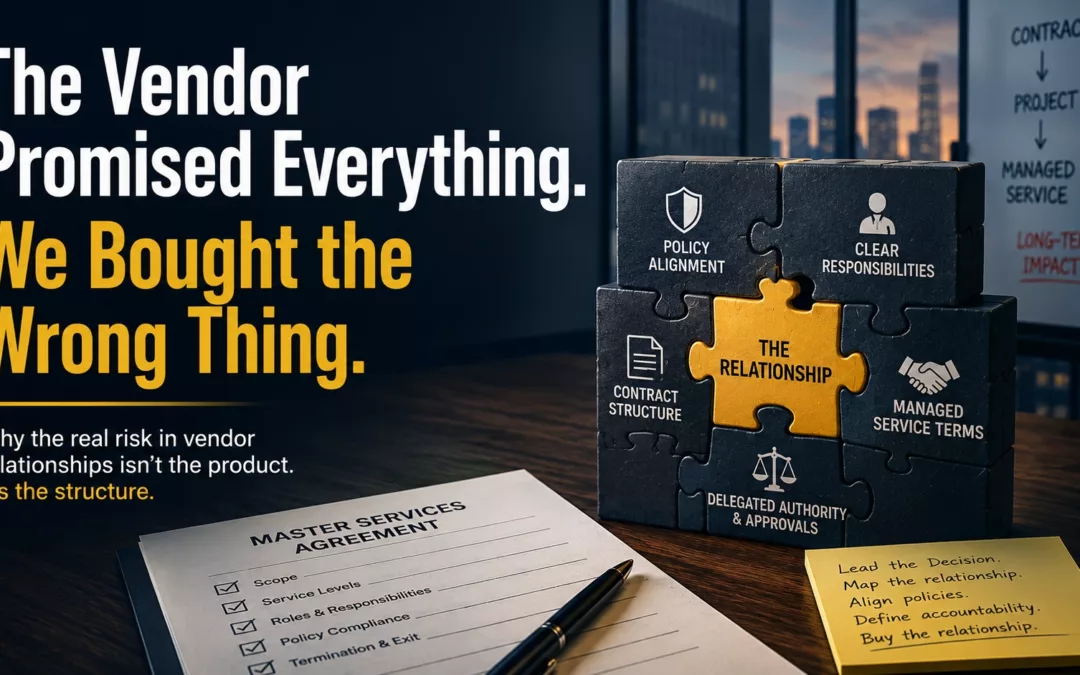
When the vendor leads, the conversation centers on features and the demo. The features are real. The demo is honest. But that is not where these relationships succeed or fail. They succeed or fail in the contract structure, the policy alignment, the division of responsibilities, and the managed service terms that govern the relationship for years after the project closes.
This connects to something I have written about before, on why enterprises must stop adding tools and start managing what they already own. The same discipline applies here.
A SOC solution is not a purchase. It is a multi-year operational dependency.
The right time to define who is accountable for what, which actions require approval, and how policy conflicts get resolved is before you sign. The question of which decisions you delegate and which stay with you is not just an AI question. It applies to every vendor relationship you enter.
Lead the decision yourself. Map the full lifecycle from contract to project to managed service before you evaluate a single feature. Make policy alignment a gating requirement, not a discovery you make in month three. And never let the elegance of a demo substitute for the rigor of a relationship structure.
The vendors worth working with respect this. They would rather build the relationship correctly than win a fast signature and spend three years in friction.
Buy the relationship. Not the demo.
The discipline of leading vendor relationships rather than being led by them is one of the themes I explore in Life in the Digital Bubble, alongside broader perspectives on how technology is reshaping accountability and decision-making in organizations. More on AI strategy and digital transformation at tamerbadawy.com.
Get my latest articles in Google
Add tamerbadawy.com as a preferred source to see more of my articles in Google Search and AI results.