
Digital Transformation & AI Strategy
How organizations design, prioritize, and execute transformation and turn AI from experimentation into real business value.
Digital transformation does not fail because of technology. It fails because of unclear priorities, fragmented execution, and a lack of alignment between business and IT.
These insights focus on how organizations move from strategy to execution, how AI initiatives can be scaled responsibly, and how leaders can turn complexity into structured progress.
The focus is on what works in reality: defining direction, making trade-offs, and building transformation models that deliver measurable outcomes.
Latest in Digital Transformation & AI Strategy
Practical insights on digital transformation and AI strategy, from prioritization and operating models to execution at scale.
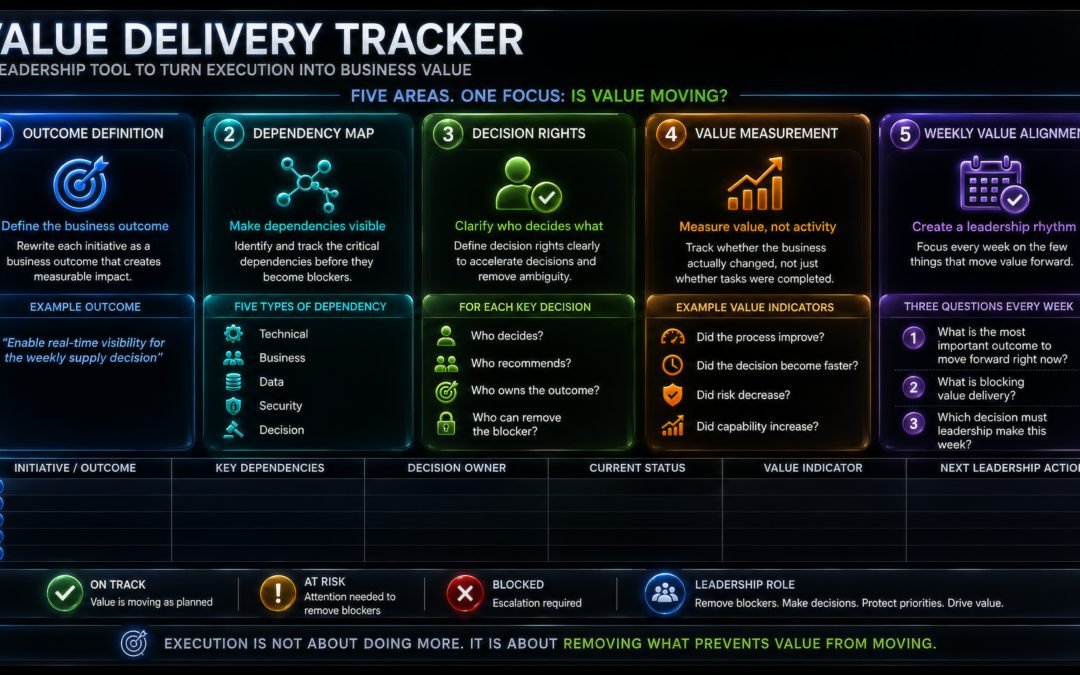
Digital Transformation for Leaders, Step 7: Project Management and the Value Delivery Tracker
Volkswagen spent billions and paid Rivian 5.8 billion more, just for working software. It was never a technology problem. Run the same ten-minute test that exposes whether your transformation is actually moving or just being reported on.
Questions This Hub Helps Answer
While writing these articles, I am involved in a continuous process of exploring how to better understand the strategic questions that shape transformation results. My task is to crystallize ideas and explore the real decisions leaders face when priorities conflict, when AI outpaces the organization, and when execution is more complex than the strategy. These articles are my way of working through those questions and trying to find answers that are more clear and practically relevant.
-
- What makes digital transformation efforts fail?
- What should an AI strategy actually include?
- How do organizations move from pilot to value?
- How should leaders prioritize transformation?
Transformation Strategy
Define clear direction and priorities. Understand how to move from vision to executable strategy without creating fragmentation.
AI Adoption & Scaling
From pilots to production. Learn how to structure AI initiatives that create real value and avoid isolated experiments.
Operating Models
Design how teams, platforms, and processes work together to support transformation at scale.
Execution & Prioritization
Transformation is about choices. Explore how leaders prioritize, sequence initiatives, and avoid spreading efforts too thin.

Innovation in the Sky’s Blind Spot
The spaces between technologies are where real innovation happens. Levitate Aerospace has found one of those gaps in the sky, where drones and helicopters meet. The company is changing the way that large-scale monitoring, digitization, and management of critical infrastructure corridors can be done by combining lighter-than-air flight with advanced sensing and data platforms.

Digital Minimalism for Enterprises (3/3): Building a Stop-Doing Operating Model
The majority of businesses keep thorough backlogs for construction. New AI pilots, new features, and new integrations. Roadmaps are structured. Committees for investments are organized. Pipelines for deliveries are optimized. However, most companies do not keep a backlog for stopping.
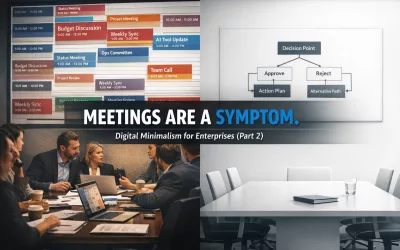
Digital Minimalism for Enterprises (2/3): Meeting Inflation Is an Architectural Problem
Meeting overload is typically handled as a disciplinary matter in organizations. It is an architectural signal as seen by a CIO. Meetings increase to make up for fragmented systems, conflicting metrics, and unclear decision rights. The architecture is the real issue, not the calendar.

Digital Minimalism for Enterprises (1/3): Why Enterprises Must Stop Adding Tools
Every big transformation starts with good intentions. But when progress turns into accumulation, digital transformation quietly becomes digital clutter. A new platform for working together promises to make it easy to work together. A new analytics dashboard says it...
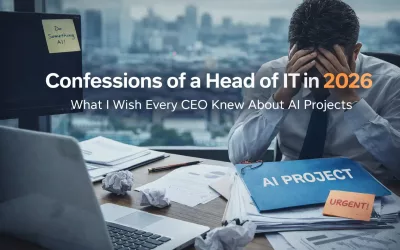
Confessions of a Head of IT: What I Wish Every CEO Knew About AI Projects
It seems like AI is a success story from the outside, since almost every company says they are “using AI.” As the Head of IT, the truth is more complicated from the inside. In this article, I talk about five real problems with AI projects in 2026, from the zoo of tools we’ve made to the lack of a human operating system. I also talk about what CEOs and boards really need to do to fix things.

Europe’s Bold AI Gamble: Can a Sovereign, Ethical Model Compete with the U.S. and China?
The new large language model that Switzerland made for the public is more than just a technical achievement. It shows that Europe is trying to create its own moral and independent way of using AI, separate from the U.S. and China. The main question is whether a model based on values can still compete in a world where size, speed, and private capital are the most important things.
Bring these insights to your organization.
If you are defining or leading a digital transformation and need clarity on strategy, operating models, or AI adoption, I support organizations through strategic advisory on transformation, technology direction, and execution.
Explore other insights
Executive & Leadership Insights
Leadership decisions, governance, and how CIOs and executives navigate complexity and drive transformation at the top level.
Modern IT & AI Infrastructure
The technical foundation required to scale AI, secure data, and operate resilient, future-ready platforms.
Industry Playbooks
How digital transformation and AI play out across industries, including manufacturing, healthcare, finance, and beyond.
AI, Ethics & Society
The broader impact of AI and digital systems on people, organizations, and society, from ethics to digital wellbeing.